
Heart the Lover
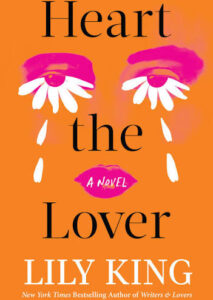
I’ve long believed that novels can do something therapy alone sometimes cannot. A powerful story slips past our defenses. It names feelings we have not yet found language for. It lingers.
So when a client tells me a book moved him, I listen. When several clients mention the same book, I consider it part of my continuing education. And when my adult daughter brings Heart the Lover by Lily King on vacation and can’t put it down, I pay attention.
I came to this novel without having read King’s companion book, Writers & Lovers. I will likely circle back. But Heart the Lover stands beautifully on its own—a work of elegant prose that captures both the innocence and the psychological complexity of young adulthood.
We follow a protagonist whose name is withheld until the final pages, a choice that feels psychologically intentional. Identity, after all, is not fixed in youth—it is constructed, tested, defended, and revised in relationship. Within an intoxicating circle of collegiate friends who both intimidate and inspire her, she becomes “Jordan,” a version of herself that feels braver, sharper, more socially fluent. She falls into a love triangle that ultimately crystallizes into something deeper: a connection between two ambitious, idealistic young people who want their lives to matter.
What unfolds is tender and devastating in equal measure. King captures something rare: the almost sacred intensity of first adult love. It is fragile. It is precarious. It is infused with longing and projection. And it is often unsustainable—not because the love is false, but because the people inside it are still becoming.
That is where the novel feels especially relevant to my work as a therapist.
Heart the Lover is not simply a romance. It is a study in development. It shows how profoundly we are shaped by our families—by what was spoken, and what was not; by what was expected, and what was silently demanded. The characters are intelligent and sincere. They want to love well. But wanting and being ready are not the same thing.
Many young adults carry into romance unresolved family dynamics, unexamined fears, and unconscious loyalties. The capacity for intimacy requires differentiation—the ability to remain oneself while moving toward another. And that capacity often lags behind longing.
What I admire most about King’s writing is her portrayal of the approach–avoidance dance so common in love: the simultaneous pull toward closeness and retreat from it. In one scene, the narrator waits at baggage claim for the man she loves. Her anticipation is electric; her body is alive with sensation. Yet she recognizes a quiet truth: if he fully understood the depth of her love, it would terrify him.
That moment captures something universal. Intimacy exposes us. To be loved is to be seen. And to be seen can feel dangerous when we are still uncertain of ourselves.
Alongside this exquisite rendering of young love, King writes with unusual clarity about existential awakening. Her characters metabolize pain in real time. They feel it in their bodies. They struggle with it. And through it, they become more conscious, more deliberate, more themselves.
As both a therapist and a mother of adult children, I find myself moved by that arc. Youthful love is rarely tidy. It can be misguided, misaligned, or mistimed. And yet it is formative. It shapes the nervous system. It clarifies values. It exposes vulnerabilities that must eventually be integrated.
In that way, heartbreak is not the opposite of growth. It is often its catalyst.
And perhaps that is why so many of my clients—and my daughter—pressed this book into my hands. It does what good fiction does best: it illuminates the private terrain of becoming.
